Recent events in the Modern Languages Department

We pride ourselves in MFL in bringing the cultures of countries alive beyond the confines of examination syllabi, both in and out of the classroom. 

At the very end of the Autumn Term, Mr Supperstone organised a KS5 German day at BFI Southbank, and was accompanied by Mr Haywood. The day was aimed at supporting KS5 German students to build their cultural capital, expand their vocabulary, and improve their critical film analysis skills by examining key themes and styles in contemporary German cinema. It explored some A Level set films Goodbye, Lenin! (2003), The Lives of Others (Das Leben der anderen) (2007), the latter studied by HBS students, as well as other contemporary films. Students explored the events, people and narratives that marked the end of the Cold War and ushered in a new era in German and European history.
Conducted in German, the morning consisted of a clip-based presentation introducing the themes, teaching film-specific vocabulary in German and analysing key scenes with activities aimed at supporting students in building on their critical film analysis skills. In the afternoon there was a screening of Goodbye, Lenin!

After the Christmas break, it was certainly a busy Spring term. On 27th January, thirty Year 9 French students went to a KS3 film day at the BFI Southbank. The day was organised to commemorate Holocaust Memorial Day. The morning session, conducted mainly in French, analysed aspects of the film we were going to watch in the afternoon, Le voyage de Fanny (2016), a true story of a group of Jewish children fleeing Occupied France. It consisted of a clip-based presentation introducing new vocabulary and encouraging dialogue in French. It also provided a brilliantly educational background to the lead up to war in Europe and the 1940-44 Occupation of France by Nazi Germany, a period that is rarely studied in schools. Students learned how the Occupation split France into two zones, ‘free’ (run by a French puppet government) and ‘occupied’ (governed by the Nazis).  The film itself was very thought-provoking, moving and uplifting. Thank you to Mme Hersart who accompanied the trip.

In late January and early February, the London leg of our Year 10 French and German Exchanges took place, with the foreign students being hosted in London for the week by their English families. These exchanges have been running with great success since the mid-1990s, and we are proud of the opportunities for the exchange of cultures and real immersion in a different language on both sides that they continue to offer. Students always have such rewarding experiences and make life-long memories, sometimes staying in contact with partners for years to come. Thank you to Mr Supperstone co-ordinating the German visit, to Mrs Price for putting up one of the French teachers, and of course, to all parents for warmly hosting an extra French or German son or daughter in their families for the week.
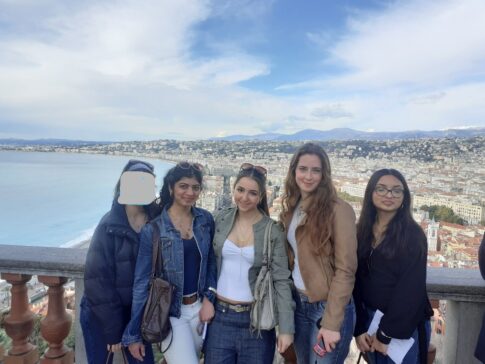
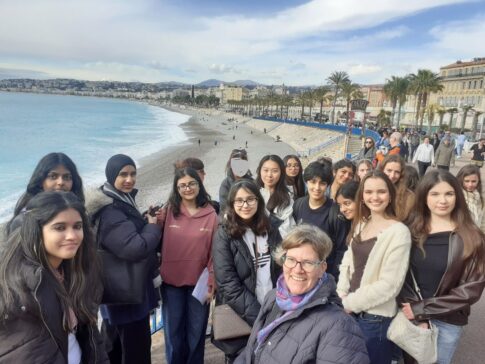
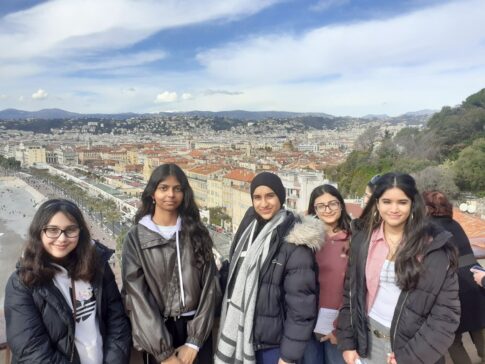
Our Year 12 French trip to Nice took place from 2nd -5th February. It was wonderful to be back on the Côte d’Azur (French Riviera) in South East France for the 7th edition of our annual language and heritage trip. On arrival in Nice on Thursday lunchtime, we dropped cases at our very centrally located accommodation just off the main street, the avenue Jean-Médecin, before getting our bearings around town and seeing preparations for the famous Nice Carnival.

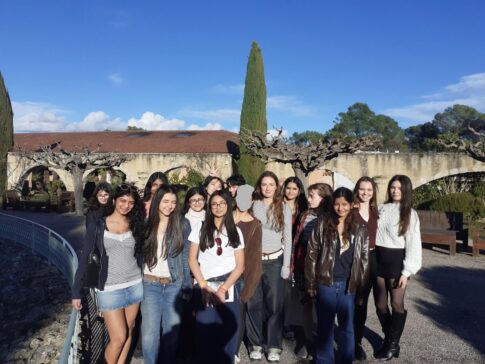
Friday was spent in the arrière-pays (the hinterland) to the west of Nice, also immersed in French with a guided tour of the historic Fragonard parfumerie in the town of Grasse on the process of making perfumes. Soap, creams and perfumes were purchased to maintain our rigorous personal beauty regimes, especially those of the teachers. Then onto a vineyard for a tour learning about the different processes needed to produce the famous wines of the region. Students did brilliantly filling in their trip workbooks, as the vocabulary was very technical.

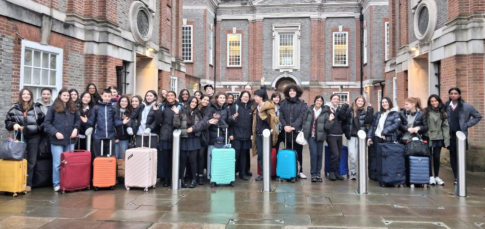
The French group leaves HBS, February 2026

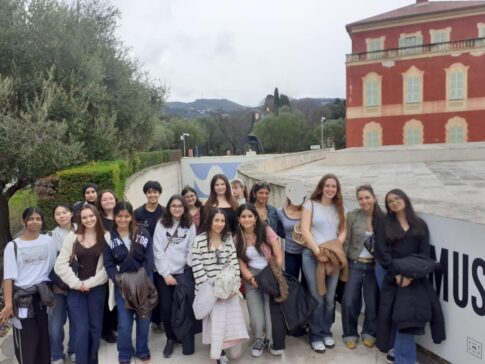
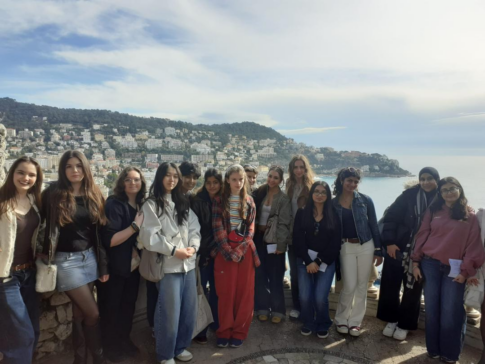
Saturday morning was spent on a 3 hour walking tour of Nice with our excellent guide, Anke. We were informed, all in French naturally, about Nice’s fascinating history, customs, dialect and architecture, many influenced by Italian rule until the late 19th century. After lunch we walked up to the Matisse Museum to appreciate the work of this artist who lived and painted in Nice. Before our departure on Sunday, students had the morning to explore the renowned Flower market and the Old Town, then we all visited the fascinating Chagall Museum. All in all, we had a weekend full of French immersion with beautiful heritage, acceptable weather, and tasty food, including some local specialities. Thanks to the students for being so fun and enthusiastic about each aspect of the trip, and to Mrs Graff for accompanying.


Well done to Julia G in Year 12 who was one of two runners up in a King’s College London Spanish Writing competition, where the judges said, “Many congratulations, we thought you wrote a wonderful piece!”

Elodie L in Year 12 entered the Fitzwilliam College, Cambridge French Translation competition, translating a passage of Voltaire into English.

At the end of term, some of our KS4-5 students also entered the Anthea Bell Young Translators Competition, organised each year by Queen’s College Cambridge. It is a fantastic competition, asking students to translate from a range of literature, from children’s stories, to novels, to comic books. 30 entries were submitted by the end of term, and we now wait to see how they got on.

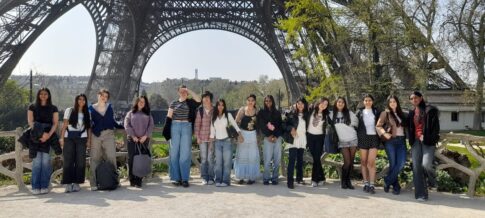
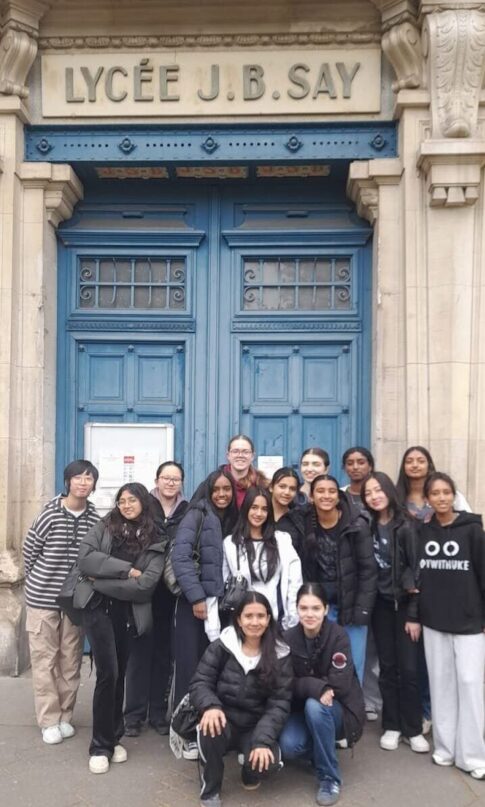
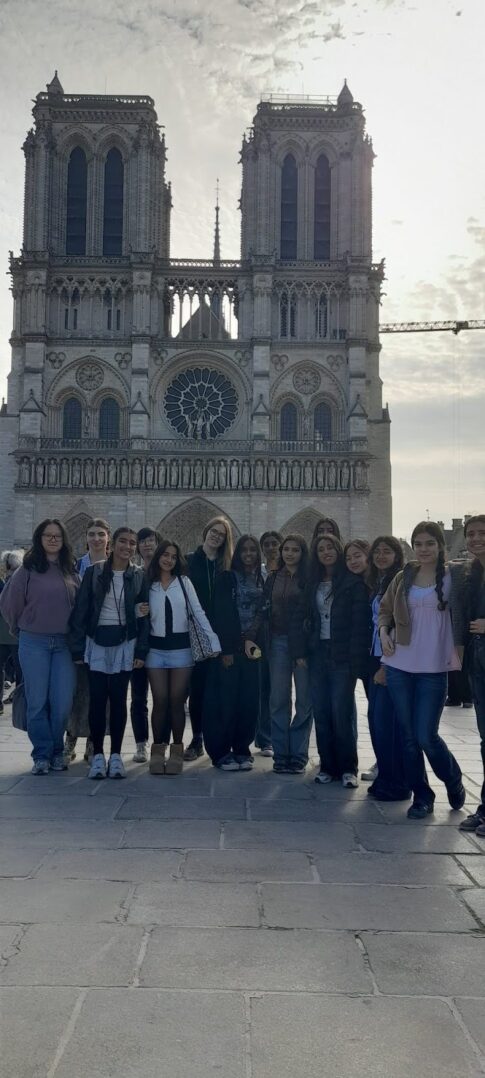
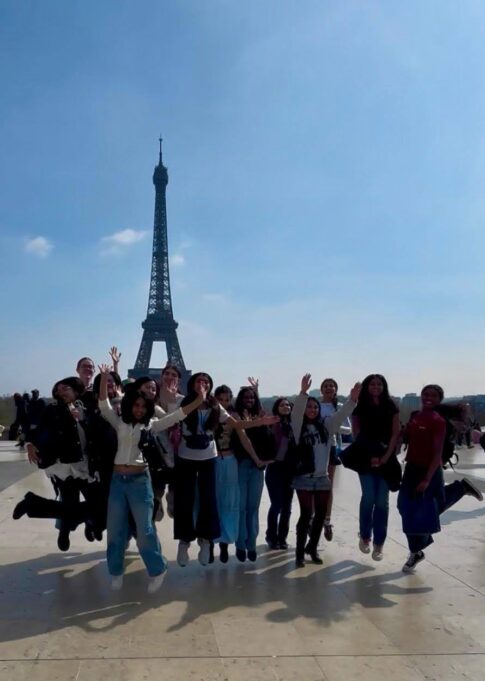
The Year 10 French Exchange to Paris took place from 20th-27th March after a busy half term in school. We arrived a little late after a Eurostar delay, and students immediately departed the Gare du Nord to spend the weekend with their partners, whom they had got to know in London in January.

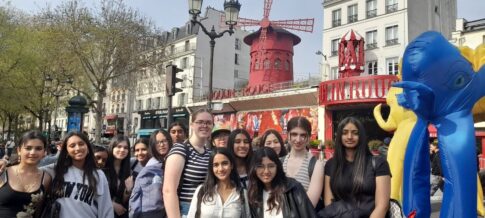
Monday 23rd was the big walking day, along the river from school and then climbing the stairs up two levels of the Eiffel Tower, with a lift to the very top, then a walk to Trocadéro for an ice-cream pit stop; we continued on foot to the Arc de Triomphe, before taking a bus to the Moulin rouge at the foot of Montmartre. A walk up the hilly Olympic and Tour de France cycle racing route to Montmartre for lunch followed by a visit to the stunning Sacré Coeur Cathedral rounded off our day.

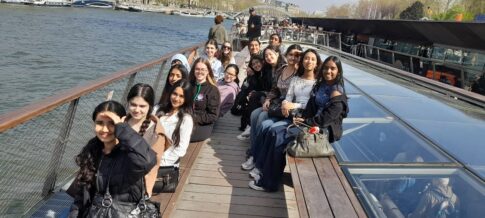
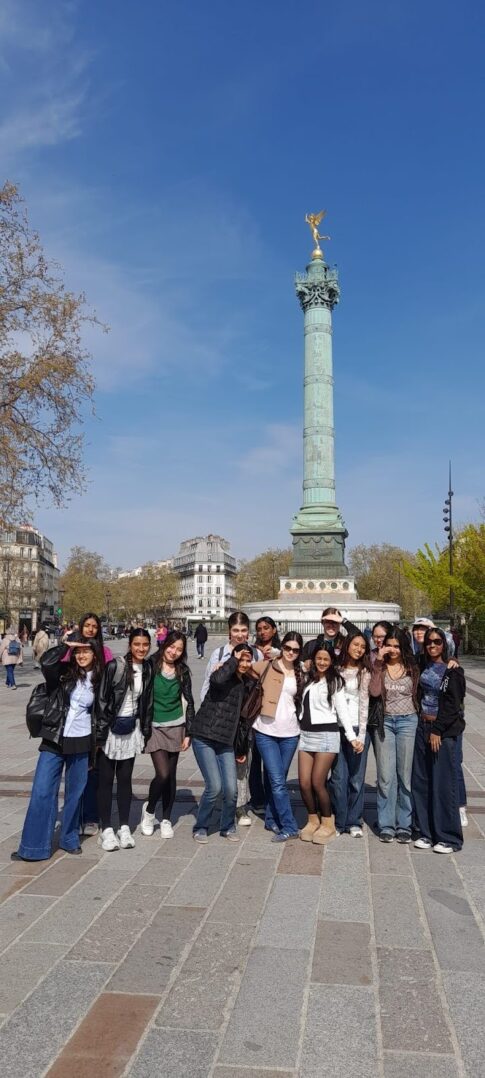
Tuesday comprised the recently refurbished and beautiful Notre Dame Cathedral, before an RER train and walk along the river to catch our Seine boat trip in full sunshine. We then went to metro line 6 to take the train over the beautiful Bir Hakeim viaduct across the Seine to Arc de Triomphe, then to Bastille in the east of Paris. We walked down to the bottom of the Canal St Martin (Arsenal), just below the Bastille Opéra, to have lunch, then around the canal/river lock, back to the Seine and to l’île de la cité for delicious Berthillon ice creams!

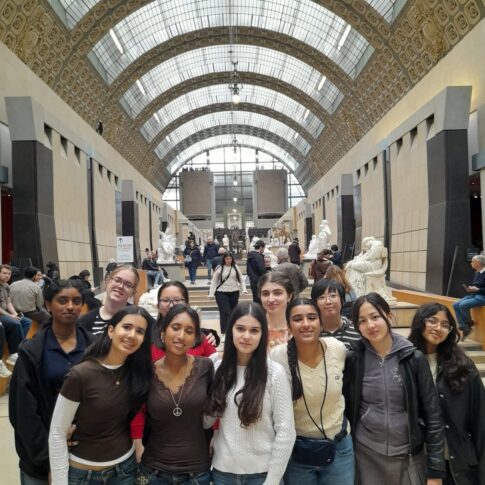
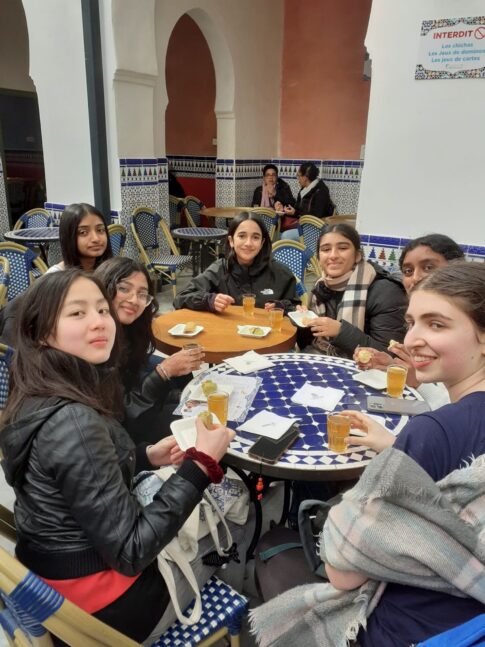
Wednesday morning was spent observing and participating in lessons in school, before a trip to visit the Grand Mosque of Paris via the Jardin des Plantes, and sample mint tea and sticky pastries afterwards. We had hoped to see the nearby Arènes de Lutèce, a Roman amphitheatre, but it was closed due to bad weather. Our final day took us to the wonderful Musée d’Orsay for 3 hours in the morning, where some of us saw the excellent temporary exhibition of Renoir’s paintings, drawings, prints and lithography. Each day, students volunteered to research key facts for the next day’s visits and then presented them to the group.

We returned home on Friday after a full week, tired, but with a head full of French and a spring in our step. Thank you very much to the students for being engaged and to Miss Morris for accompanying so brilliantly. Last but by no means least, many thanks to Christine and Emmanuelle, the two teachers in Paris, who embraced the true spirit of the exchange and hosted me and Miss Morris so warmly; we also benefit from becoming true Parisians for a week. Vive l’entente cordiale!

Coming up in the Summer Term, we look forward to the Year 10 Seville Trip in May, the Year 7 Trip to Château Beaumont, Normandy in late June, and the Year 10 German Exchange to Munich in July.

Mr Haywood, Head of Modern Foreign Languages